
From the outside, the relationship between a brand and a cosmetic laboratory often appears straightforward: a brand has an idea, a laboratory develops the product, and manufacturing follows. In reality, especially in the clinical and professional environment, this relationship is far more complex—and far more selective—than many brands anticipate.
For cosmetic manufacturers operating in regulated, science-driven contexts, not every brand is a suitable partner. Laboratories that specialize in clinical, dermatological, or professional cosmetics do not evaluate projects solely based on commercial potential. Instead, they assess whether a brand is structurally, strategically, and culturally prepared to engage in a joint development process.
This perspective is rarely discussed publicly. Most content aimed at clinics and brands focuses on what laboratories can offer: formulation expertise, regulatory compliance, production capacity. Much less attention is given to the reverse question: what does a cosmetic laboratory expect from the brand?
Yet this question is decisive. From a laboratory’s standpoint, the success or failure of a product development project depends as much on the brand’s clarity, commitment, and maturity as it does on technical execution. A misaligned brand-lab relationship leads to inefficiencies, delays, compromised quality, and ultimately underperforming products.
In the clinical space, expectations are even higher. Laboratories working with clinics understand that products will be associated with medical authority, patient trust, and therapeutic outcomes. This raises the bar significantly compared to mass-market or purely cosmetic projects.
This article explores the development process from the laboratory’s point of view, clarifying what clinical cosmetic laboratories truly value when deciding whether—and how—to engage with a brand. Understanding these expectations allows clinics and professional brands to approach development not as a transactional request, but as a strategic collaboration.
Strategic Clarity: What Laboratories Need Before Development Begins
One of the first—and most critical—elements cosmetic laboratories assess when engaging with a brand is strategic clarity. Before any discussion about ingredients, textures, or packaging takes place, laboratories seek to understand whether the brand has a coherent vision for the product and its role within a broader ecosystem.
From a cosmetic laboratory perspective, lack of clarity at this stage is one of the strongest predictors of project friction.
A Clear Purpose for the Product
Laboratories expect brands to articulate why a product should exist, not just what it should be. In clinical environments, this purpose must go beyond trend-driven concepts or generic market opportunities.
Key questions laboratories look to have answered include:
- What clinical or functional need does this product address?
- How does it fit within the brand’s treatment protocols or professional philosophy?
- Is it designed for pre-treatment, post-treatment, or long-term maintenance?
When brands cannot clearly define the product’s purpose, development risks becoming reactive rather than intentional. This often leads to repeated reformulations, shifting objectives, and compromised outcomes.
For laboratories, clarity of purpose allows scientific and regulatory decisions to be made coherently from the outset.
Understanding of the Target User and Context of Use
Another critical expectation is a well-defined understanding of who the product is for and how it will be used. In clinical cosmetics, context matters enormously. A product designed for post-procedure skin behaves very differently from one intended for daily preventive care.
Laboratories need brands to specify:
- Patient profile (skin condition, sensitivity, treatment exposure)
- Frequency and method of use
- Professional recommendation versus independent consumer use
Without this information, laboratories are forced to make assumptions—an approach that increases risk and reduces precision.
Brands that demonstrate a deep understanding of their patient or user base enable laboratories to formulate with greater accuracy and confidence, improving both safety and performance.
Realistic Expectations Around Innovation
Innovation is often cited as a goal, but laboratories distinguish quickly between meaningful innovation and vague ambition. Experienced cosmetic manufacturers know that true innovation requires trade-offs: between efficacy and tolerance, between novelty and regulatory feasibility, between speed and robustness.
Laboratories expect brands to:
- Understand the constraints of cosmetic regulation
- Be open to scientific guidance rather than fixed ideas
- Accept that not all concepts are technically or legally viable
Brands that approach development with rigid expectations or purely marketing-driven concepts often struggle to align with laboratory realities. Conversely, brands that show openness to evidence-based decision-making are seen as more credible partners.
Long-Term Vision Over One-Off Products
From a laboratory’s standpoint, product development is most effective when aligned with a long-term brand vision. Laboratories invest time, expertise, and resources into each project. They look for partners who view development as an ongoing process rather than a one-time transaction.
Brands that articulate:
- A broader product roadmap
- Long-term positioning goals
- Commitment to product evolution and improvement
are far more attractive to clinical laboratories. This signals seriousness, stability, and strategic intent.
In contrast, brands focused solely on launching a single product with minimal future planning often struggle to justify the level of rigor required for clinical-grade development.
Decision-Making Structure and Accountability
Another often-overlooked factor is internal decision-making structure. Laboratories value brands that have clear accountability and streamlined approval processes. Development requires timely feedback, informed decisions, and consistent direction.
From the laboratory’s perspective, projects become inefficient when:
- Multiple stakeholders give conflicting input
- Decisions are frequently reversed
- There is no clear project owner on the brand side
Clinical laboratories expect brands to designate responsible decision-makers who understand both the strategic and technical dimensions of development. This clarity reduces delays and ensures alignment throughout the process.
Respect for the Laboratory’s Expertise
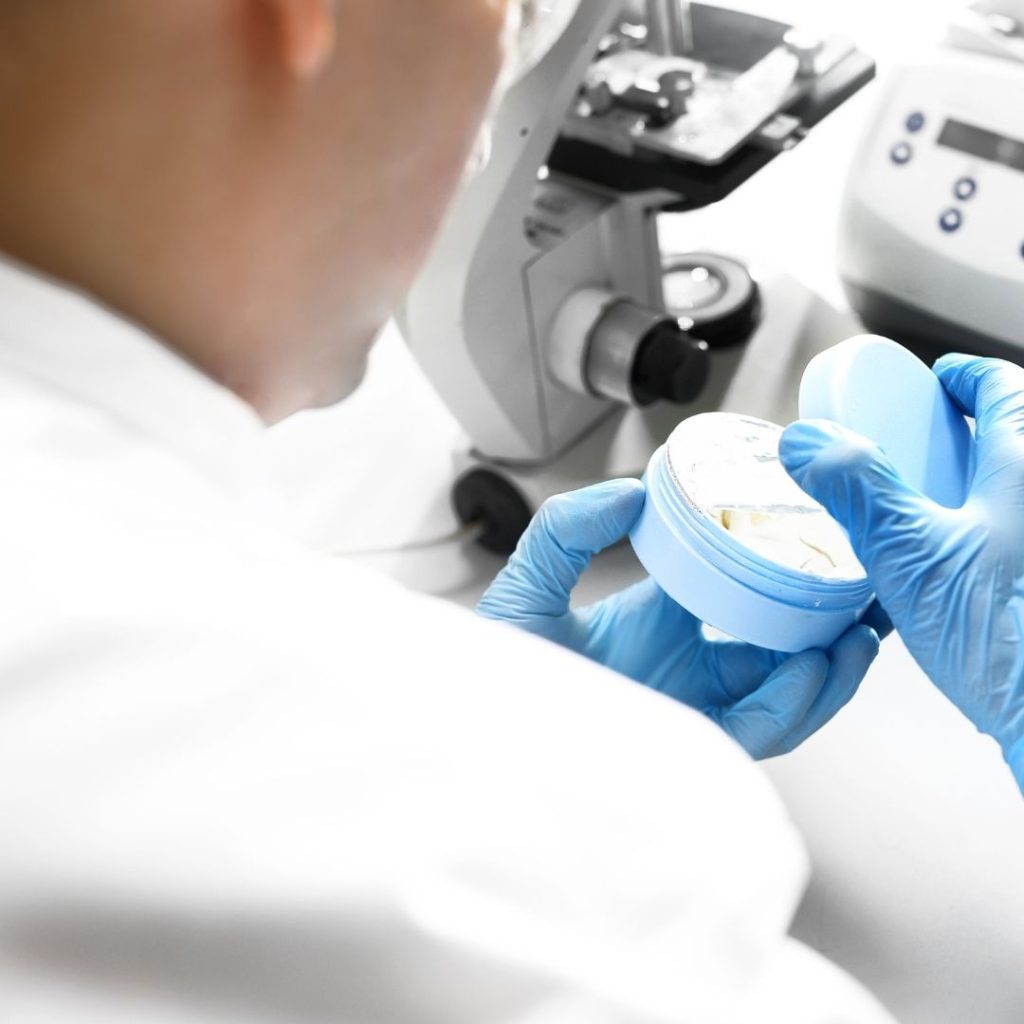
Finally, strategic clarity includes respect for the laboratory’s role as a scientific partner, not just a service provider. Cosmetic laboratories expect brands to recognize that formulation, stability, safety, and compliance are not interchangeable with marketing preferences.
Brands that approach laboratories as collaborators—rather than executors—create an environment where expertise can be fully leveraged. This mutual respect is foundational to successful joint development.
Specialized laboratories such as MS Clinics Lab operate precisely within this collaborative framework, prioritizing strategic alignment and clinical relevance from the very first stages of a project.
Scientific and Technical Readiness: What Laboratories Look for Beneath the Brand Story
Once strategic clarity is established, cosmetic manufacturers quickly shift their evaluation toward a second, decisive layer: the brand’s scientific and technical readiness. From a laboratory perspective, this is where many projects reveal their true level of maturity—or lack thereof.
Clinical and professional cosmetic laboratories operate at the intersection of formulation science, skin biology, and regulatory compliance. They expect brands to engage with this reality thoughtfully, even if they do not possess in-house technical expertise.
Respect for Formulation as a Scientific Discipline
One of the clearest indicators laboratories use to assess a brand is how it approaches formulation. Brands that treat formulation as a purely aesthetic or marketing-driven exercise often encounter friction early in the process.
From a laboratory standpoint, formulation is a scientific system, not a menu of ingredients. Every component has functional, chemical, and biological implications. Active ingredients interact with vehicles, preservatives affect tolerance, and textures influence both efficacy and user compliance.
Laboratories expect brands to:
- Accept evidence-based recommendations
- Understand that not all ingredient combinations are feasible
- Recognize the importance of stability and compatibility
Brands that insist on specific ingredients without understanding formulation constraints often slow development and compromise product integrity. In contrast, brands that show curiosity, openness, and trust in scientific guidance are perceived as reliable partners.
Clinical Logic Over Trend-Driven Concepts
Another critical expectation is the ability to distinguish clinical logic from market trends. While awareness of industry trends is valuable, laboratories prioritize formulations grounded in skin physiology and clinical relevance.
Trends may inspire direction, but laboratories assess whether:
- Actives are supported by credible data
- Concentrations are appropriate for clinical use
- The product addresses a real functional need
In clinical cosmetics, novelty without justification is a liability. Laboratories therefore value brands that are willing to move beyond buzzwords and engage in rational product design.
Understanding of Skin Tolerance and Risk
In a clinical environment, tolerance is non-negotiable. Laboratories working with clinics assume that products may be used on skin that is sensitized, inflamed, or recovering from procedures.
Brands that acknowledge this reality and prioritize:
- Barrier protection
- Anti-inflammatory strategies
- Controlled active delivery
are far easier to align with than those focused exclusively on aggressive performance claims.
From the laboratory’s point of view, a brand’s sensitivity to risk management at skin level reflects its overall professionalism.
Openness to Testing, Validation, and Iteration
Clinical-grade development rarely follows a straight line. Laboratories expect brands to accept testing, iteration, and adjustment as integral parts of the process.
This includes:
- Stability testing that may require reformulation
- Compatibility testing with packaging
- Tolerance assessments that lead to ingredient refinement
Brands that seek shortcuts or resist testing are perceived as misaligned with clinical standards. Conversely, brands that embrace validation demonstrate seriousness and long-term vision.
Operational Commitment: Why Laboratories Evaluate the Brand’s Ability to Execute

Beyond science, cosmetic laboratories place strong emphasis on operational commitment. Even the most promising concept can fail if the brand lacks the structure, resources, or discipline to execute development properly.
From a laboratory’s perspective, operational readiness is not about size—it is about reliability and consistency.
Decision-Making Efficiency and Project Ownership
Laboratories assess how decisions are made on the brand side. Development timelines depend heavily on clear, timely feedback. When approvals are delayed or repeatedly reversed, inefficiencies multiply.
Brands that designate:
- A clear project owner
- Defined decision-making authority
- Structured feedback processes
are significantly easier to work with. Laboratories value predictability, not speed at any cost.
Commitment to Regulatory and Quality Standards
Another key criterion is the brand’s attitude toward regulation and quality. Laboratories working in professional or clinical contexts operate under strict frameworks. They expect brands to treat compliance as foundational, not optional.
This includes:
- Respect for ingredient restrictions
- Realistic expectations around claims
- Willingness to adapt concepts to regulatory realities
Brands that view regulation as an obstacle rather than a safeguard often create tension during development. In contrast, brands that understand compliance as part of credibility are seen as aligned with laboratory values.
Financial and Logistical Preparedness
Product development requires sustained investment—not only at launch, but throughout the product lifecycle. Laboratories therefore evaluate whether a brand is financially and logistically prepared to support:
- Minimum production runs
- Ongoing quality controls
- Documentation updates
- Potential reformulations
This is not about budget size, but about commitment continuity. Laboratories are cautious with projects that appear underfunded or overly dependent on optimistic sales projections.
Long-Term Partnership Mentality
Finally, laboratories look for brands that view development as a partnership, not a transactional exchange. Successful projects are built on mutual respect, transparency, and shared objectives.
Brands that communicate openly, respect timelines, and value laboratory input create working relationships that lead to better products and more efficient collaboration.
From the laboratory’s perspective, the ideal brand is not the one with the loudest concept, but the one with the strongest operational discipline.
Long-Term Vision and Brand Maturity: What Laboratories Expect Beyond the First Product
From the perspective of cosmetic manufacturers, one of the most revealing aspects of a brand is not how it approaches its first product, but how it envisions the future of the collaboration. Laboratories specializing in clinical and professional cosmetics invest significant expertise and resources into each development project. As a result, they naturally favor brands that demonstrate long-term thinking rather than short-term opportunism.
Brand maturity, in this context, is not measured by size or market presence. It is measured by consistency of vision, decision-making coherence, and commitment to evolution.
A Roadmap That Goes Beyond a Single Launch
Laboratories value brands that arrive with a clear sense of direction. Even if the immediate project involves only one product, a broader roadmap signals seriousness and strategic intent.
From a laboratory standpoint, a roadmap helps answer critical questions:
- Is this product the foundation of a larger system?
- Will future developments build on the same scientific principles?
- Is there potential for protocol-based expansion?
Brands that treat development as an isolated initiative often struggle to maintain momentum. In contrast, those that see product development as a continuous process enable laboratories to plan more effectively and invest more confidently in the partnership.
Willingness to Evolve and Improve
Clinical cosmetics are not static. New research, regulatory changes, and real-world performance data all inform product evolution. Laboratories expect brands to understand that a product is never truly finished.
Mature brands show openness to:
- Reformulation when evidence supports improvement
- Adjustments based on post-market feedback
- Updating claims and documentation as standards evolve
This flexibility is not a sign of weakness; from the laboratory’s perspective, it is a sign of scientific integrity.
Brands that resist change or treat reformulation as a failure often limit their own growth potential.
Investment in Education and Knowledge Transfer
Another indicator of long-term commitment is how brands approach education. Laboratories recognize that even the best-formulated product will underperform if it is poorly understood or incorrectly used.
Brands that invest in:
- Training for clinical staff
- Clear usage protocols
- Ongoing professional education
are seen as partners who care about real-world outcomes, not just product launches.
From a laboratory perspective, education bridges the gap between formulation science and clinical reality, ensuring that products deliver their intended value.
Red Flags Laboratories Identify Early in Development Projects
Just as laboratories look for positive signals, they are also attuned to red flags that suggest misalignment or elevated risk. Recognizing these warning signs early allows laboratories to protect their standards—and, in some cases, decline projects that are unlikely to succeed.
Overemphasis on Speed to Market
Brands that prioritize speed above all else often underestimate the rigor required for clinical-grade development. While efficiency is important, laboratories know that rushed projects are more likely to encounter stability issues, compliance challenges, or tolerance problems.
A strong emphasis on speed without regard for validation signals a misalignment with clinical standards.
Marketing-Driven Demands Without Scientific Support
Laboratories are cautious of brands that insist on claims, ingredients, or concepts without credible scientific justification. In professional environments, unsupported claims are not merely a regulatory risk—they undermine trust.
Brands that are unwilling to adapt their messaging based on scientific reality create friction and increase project risk.
Lack of Internal Alignment
When different representatives from the same brand provide conflicting guidance, laboratories recognize a lack of internal alignment. This often leads to delays, confusion, and compromised outcomes.
Clear internal communication and accountability are essential for efficient collaboration.
Resistance to Regulatory Constraints
Regulatory compliance is not negotiable. Brands that perceive regulation as an obstacle rather than a safeguard often struggle to work effectively with professional laboratories.
From the laboratory’s point of view, respect for regulation reflects respect for patients, professionals, and the integrity of the industry.
Conclusion: Successful Product Development Starts With Mutual Alignment
From the perspective of cosmetic manufacturers and specialized cosmetic laboratories, successful product development is never a one-sided effort. It is the result of mutual alignment between scientific expertise and brand vision.
Laboratories expect brands to arrive not just with ideas, but with clarity, commitment, and a willingness to engage in a rigorous, collaborative process. Strategic direction, scientific openness, operational discipline, and long-term vision are not optional—they are prerequisites for meaningful development.
Brands that understand and meet these expectations gain access to more than manufacturing capacity. They gain a partner capable of translating clinical philosophy into tangible, effective products.
Specialized laboratories such as MS Clinics Lab exemplify this partnership-driven approach, working with brands that value scientific integrity, regulatory responsibility, and sustainable growth.Ultimately, the most successful projects are not those driven by urgency or trends, but those built on shared standards and aligned objectives. When both laboratory and brand approach development as a joint responsibility, the result is not just a cosmetic product, but a credible clinical solution with lasting impact.