
In recent years, the aesthetics, dermatology, and medical wellness sectors have experienced a profound transformation. Clinics are no longer competing solely on treatments, devices, or professional expertise. Today, brand identity, differentiation, and long-term patient loyalty play an equally decisive role. In this context, the development of private label cosmetics for clinics has moved from being a niche strategy to becoming a central pillar of growth for forward-thinking medical practices.
At first glance, launching a private cosmetic line may appear to be a simple commercial extension—another product added to the shelf, another revenue stream alongside treatments. This assumption, however, is precisely where many clinics underestimate both the strategic value and the structural implications of creating an own-brand cosmetic line. A private label cosmetic is not “just another product.” It is an extension of the clinic’s medical philosophy, clinical credibility, and patient relationship.
Unlike retail cosmetics or third-party brands sold in-clinic, clinic own brand cosmetics sit at the intersection of science, medical trust, and brand storytelling. Every formulation, claim, texture, and protocol reflects directly on the clinic itself. When done properly, a private cosmetic line becomes a clinical tool, a branding asset, and a business accelerator—all at once. When done poorly, it risks diluting medical authority and undermining patient trust.
This article explores why a private cosmetic line should never be approached as a simple add-on, and why clinics that treat it as such often fail to unlock its real potential. We will examine the strategic, clinical, and brand-driven dimensions that make private label cosmetics a fundamentally different category—one that demands a higher level of rigor, vision, and expertise.
A Private Cosmetic Line as a Strategic Extension of the Clinic
More Than Retail: From Product to Clinical Strategy
The first and most critical distinction clinics must understand is this: a private cosmetic line is not a retail initiative; it is a strategic extension of the clinic itself. Unlike selling external brands, where responsibility for formulation, efficacy, and positioning lies elsewhere, private label cosmetics place full ownership—and accountability—on the clinic.
When patients purchase a product carrying the clinic’s name, they are not simply buying skincare. They are buying into the clinic’s medical judgment, treatment philosophy, and standards of care. This shifts the role of cosmetics from optional retail items to integrated components of the therapeutic journey.
In this sense, private label cosmetics for clinics function as:
- Pre-treatment preparation tools, optimizing skin condition before in-clinic procedures
- Post-treatment recovery solutions, enhancing outcomes and reducing complications
- Maintenance protocols, extending results between visits
- Preventive care instruments, reinforcing long-term skin health
Each product becomes part of a broader clinical ecosystem rather than an isolated SKU. This integration is what elevates private cosmetics from “products” to clinical assets.
Reinforcing Medical Authority Outside the Treatment Room
One of the most underestimated advantages of clinic own brand cosmetics is their ability to extend medical authority beyond the clinic walls. Traditionally, the clinic’s influence ends when the patient leaves the treatment room. Private label products change that dynamic entirely.
When patients apply a product at home that has been designed, prescribed, or validated by their clinic, the medical relationship continues daily. This ongoing interaction reinforces:
- Trust in the clinic’s expertise
- Perceived continuity of care
- Emotional connection to the brand
- Adherence to professional recommendations
From a strategic perspective, this continuity is invaluable. It positions the clinic not only as a place for procedures, but as a long-term partner in skin health. Over time, this significantly increases patient lifetime value while reducing dependence on constant acquisition of new patients.
Brand Differentiation in an Overcrowded Market
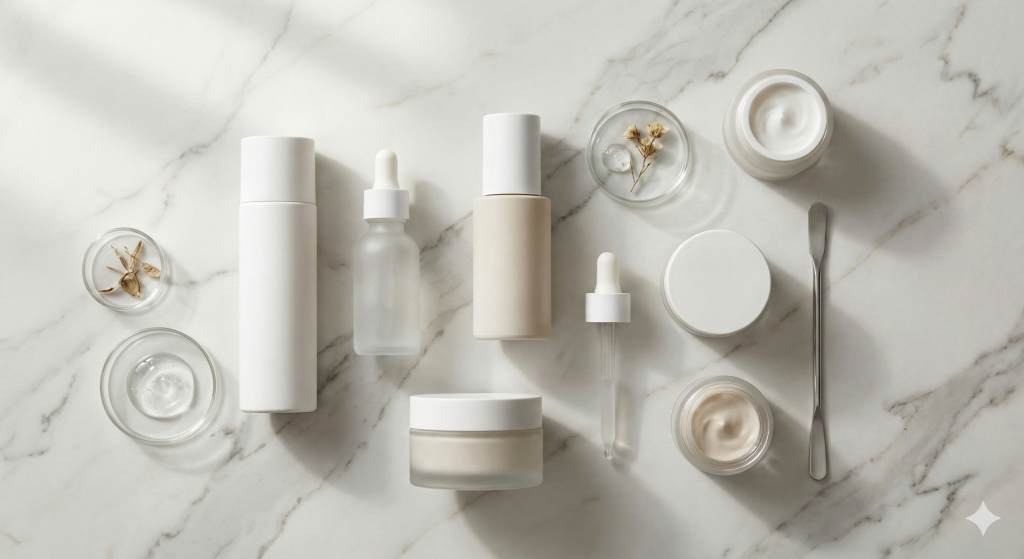
The aesthetics and dermatology markets are increasingly saturated. Devices, injectables, and treatment protocols are often similar across clinics, making differentiation difficult. In this environment, a proprietary cosmetic line becomes a powerful brand differentiator.
Unlike generic retail brands available online or in pharmacies, private label cosmetics are:
- Exclusive to the clinic
- Tailored to its patient profile
- Aligned with its medical positioning
- Difficult for competitors to replicate
This exclusivity transforms the clinic from a service provider into a brand with proprietary intellectual and clinical capital. Patients no longer compare the clinic solely on price or promotions, but on the unique value proposition embodied in its products and protocols.
Strategic Control Over Positioning and Messaging
Another key reason private label cosmetics are not “just another product” lies in strategic control. When clinics sell third-party brands, they inherit someone else’s positioning, claims, and limitations. With a private cosmetic line, the clinic defines:
- The level of clinical sophistication
- The balance between medical efficacy and sensoriality
- The language used to communicate results
- The ethical and regulatory standards applied
This control allows clinics to align their cosmetic line precisely with their medical values and brand narrative. Whether the positioning is highly clinical, biotech-driven, regenerative, or preventive, the cosmetic line becomes a direct expression of that identity.
From a long-term perspective, this alignment creates brand coherence, a factor that strongly influences patient perception and loyalty.
Financial Strategy: Beyond Short-Term Margins
While revenue generation is often the initial motivation behind private label cosmetics, focusing solely on margins is a strategic mistake. The true financial impact of a clinic own brand cosmetic line lies in its systemic effect on the business model.
Private label cosmetics contribute to:
- Increased treatment adherence and better outcomes
- Higher patient retention rates
- Reduced reliance on discounts and promotions
- More predictable recurring revenue
- Stronger brand equity over time
Seen through this lens, cosmetics are not an auxiliary income stream but a growth lever that stabilizes and scales the clinic’s business. Clinics that treat private label products as mere retail items often miss these compounding benefits.
The Risk of Treating It as “Just Another Product”
When clinics approach private cosmetics casually—choosing off-the-shelf formulas, minimal customization, or purely commercial claims—the consequences can be significant. Poorly conceived private label products can:
- Undermine clinical credibility
- Create inconsistency between treatments and home care
- Confuse patients about the clinic’s positioning
- Reduce trust rather than build it
This is why the development of private label cosmetics for clinics requires clinical rigor, regulatory expertise, and strategic vision. It is not about adding products quickly, but about building a system that reflects and amplifies the clinic’s medical authority.
Specialized partners such as MS Clinics Lab operate precisely in this space—bridging scientific formulation, regulatory compliance, and brand strategy to ensure that private cosmetic lines function as true clinical extensions rather than superficial add-ons.
Private Label Cosmetics as a Clinical Tool, Not a Commercial Accessory
One of the most common conceptual mistakes clinics make is treating private label cosmetics as a commercial accessory rather than as a clinical instrument. This distinction is not semantic—it fundamentally determines how products are formulated, prescribed, communicated, and ultimately perceived by patients.
In a medical or aesthetic clinic, every recommendation carries implicit authority. Patients assume that anything suggested under clinical supervision has been evaluated through a medical lens, not a retail one. For this reason, private label cosmetics for clinics must be designed and positioned as part of the treatment protocol, not as optional upselling products.
When cosmetics are developed as clinical tools, they serve precise purposes within the patient journey. These may include preparing the skin barrier before invasive procedures, supporting tissue regeneration post-treatment, managing inflammation, or prolonging clinical results over time. In all cases, the product is not an alternative to treatment, but a multiplier of treatment efficacy.
This approach has direct consequences at formulation level. Clinical-use cosmetics require:
- Evidence-based active ingredients
- Concentrations aligned with skin tolerance post-procedure
- High levels of biocompatibility
- Predictable performance across different skin conditions
A retail mindset prioritizes sensory appeal and immediate gratification. A clinical mindset prioritizes outcomes, safety, and long-term skin behavior. The latter is what patients expect when they trust a clinic-branded product.
Integration Into Treatment Protocols
A defining characteristic of successful clinic own brand cosmetics is their protocol integration. Products should not exist in isolation but be embedded within structured treatment pathways. This allows professionals to explain not just what the product does, but why it is essential at a specific stage of care.
For example:
- Pre-treatment skincare can reduce adverse reactions and improve treatment predictability
- Post-procedure products can shorten downtime and improve patient satisfaction
- Maintenance formulas can delay relapse or degradation of results
This protocol-based logic transforms cosmetics into a clinical necessity, not a discretionary purchase. From a behavioral standpoint, patients are far more likely to adhere to recommendations framed as part of medical care rather than as optional beauty routines.
Impact on Clinical Outcomes and Reputation
Another critical reason private label cosmetics cannot be treated as “just another product” lies in their impact on clinical outcomes. Inconsistent or poorly designed home care often undermines even the most advanced in-clinic treatments. When clinics rely on third-party products they do not fully control, variability increases.
By contrast, clinic own brand cosmetics allow practitioners to:
- Standardize post-treatment care
- Reduce unpredictable interactions with external products
- Monitor patient response more accurately
- Refine protocols based on real-world feedback
Over time, this consistency directly affects the clinic’s reputation. Better outcomes lead to higher patient satisfaction, stronger word-of-mouth, and greater perceived expertise. Conversely, a poorly performing private label product can damage trust far beyond its individual sales impact.
This is why clinics that view private label cosmetics as a clinical responsibility rather than a merchandising opportunity are the ones that achieve sustainable success.
How Private Label Cosmetics Reshape Patient Perception and Loyalty
Beyond their clinical function, private label cosmetics play a profound role in shaping how patients perceive the clinic itself. Every branded product is a communication device. It speaks—even silently—about the clinic’s values, standards, and level of sophistication.
Patients are increasingly informed and discerning. They understand that not all “clinic brands” are created equal. The quality of a private cosmetic line influences whether the clinic is perceived as:
- Scientifically rigorous or commercially driven
- Premium or generic
- Specialized or interchangeable
In this sense, clinic own brand cosmetics act as a mirror of the clinic’s identity.
Trust Transfer: From Medical Expertise to Product Confidence
One of the most powerful psychological mechanisms at play is trust transfer. Patients already trust the clinic’s medical expertise. When a cosmetic product carries the clinic’s name, that trust is automatically extended to the product—provided the experience confirms expectations.
This creates a virtuous cycle:
- Positive product experience reinforces trust in the clinic
- Trust increases adherence to recommendations
- Adherence improves results
- Results strengthen loyalty
However, this mechanism cuts both ways. If the product fails to deliver, causes irritation, or feels misaligned with the clinic’s positioning, trust erosion can occur rapidly. This is why private label cosmetics demand a higher standard than retail brands: they carry reputational risk.

Emotional Bonding and Brand Memory
Private label cosmetics also operate at an emotional level. Skincare is an intimate, daily ritual. When patients use a clinic-branded product every morning and evening, the clinic becomes part of their everyday life—not just an occasional destination.
This repeated exposure builds:
- Brand familiarity
- Emotional attachment
- Recall and preference
Over time, the clinic shifts from being a service provider to becoming a trusted reference point for skin health. This emotional dimension is often underestimated, yet it plays a crucial role in patient retention and long-term value.
Exclusivity and Belonging
Another key factor is exclusivity. Private label cosmetics are, by definition, not mass-market. When patients use products that are only available through their clinic, a sense of belonging emerges. They feel part of a curated, professional ecosystem rather than a generic consumer market.
This exclusivity:
- Reduces price sensitivity
- Increases perceived value
- Strengthens differentiation
It also discourages patients from “shopping around” based solely on promotions, as the clinic’s value proposition becomes unique and non-transferable.
Loyalty Beyond Treatments
Traditional patient loyalty is often treatment-dependent. Patients return when they need a procedure. Private label cosmetics introduce a continuous relationship model, where engagement persists between visits.
This continuity has tangible effects:
- Higher rebooking rates
- More consistent follow-up
- Increased lifetime value
- Lower churn
From a strategic standpoint, cosmetics become a retention engine, not merely a sales channel.
The Role of Specialized Development Partners
Achieving this level of alignment between product, perception, and loyalty requires expertise that goes beyond formulation alone. Strategic partners such as MS Clinics Lab support clinics in translating their medical identity into coherent, effective cosmetic lines—ensuring that products reinforce, rather than dilute, clinical positioning.
This holistic approach is what separates clinics that simply “have products” from those that build true own-brand ecosystems.
The Operational and Regulatory Complexity Behind Clinic-Branded Cosmetics
One of the clearest reasons why a private cosmetic line cannot be considered “just another product” lies in the operational and regulatory complexity that underpins its development and commercialization. While from the outside a cosmetic may appear simple, behind every compliant, safe, and effective clinic-branded product lies a sophisticated framework of scientific, legal, and quality-driven processes.
Clinics that underestimate this dimension often encounter delays, compliance risks, or reputational exposure. Unlike selling third-party brands, private label cosmetics place full regulatory responsibility on the clinic’s brand—regardless of who manufactures the product.
Regulatory Responsibility Cannot Be Delegated
In most regulated markets, cosmetic legislation assigns accountability to the Responsible Person, whose name is associated with the product on the label. For clinic own brand cosmetics, this role is either assumed directly by the clinic or contractually managed through a specialized partner. In both cases, responsibility for safety, compliance, and documentation ultimately reflects on the clinic’s brand.
This includes:
- Product safety assessments
- Ingredient compliance with local and international regulations
- Stability and compatibility testing
- Accurate and substantiated claims
- Labeling and packaging conformity
Failure at any of these levels does not remain a technical issue—it becomes a brand and trust issue. Clinics that treat private label products lightly often discover that cosmetic compliance is far more demanding than expected, especially when operating across multiple markets.
Quality Control as a Reflection of Medical Standards
Medical clinics operate under strict quality expectations, and patients intuitively extend these expectations to clinic-branded products. This means that quality control for private label cosmetics must match clinical standards, not mass-market ones.
Consistent batch-to-batch performance, microbiological safety, ingredient traceability, and manufacturing transparency are non-negotiable. Any deviation can compromise not only the product but the perceived integrity of the clinic itself.
High-performing clinics understand that their cosmetic line is effectively a tangible representation of their medical rigor. The operational systems supporting it must reflect that same level of discipline.
Scalability and Long-Term Vision
Another operational challenge lies in scalability. A private cosmetic line that works for a single clinic may face significant obstacles when expanded to multiple locations, partners, or international markets. Differences in regulation, language requirements, and distribution logistics quickly add complexity.
Clinics that approach private label cosmetics strategically anticipate growth from the outset. They design formulations, packaging, and compliance frameworks with future scalability in mind rather than short-term convenience.
This forward-thinking approach is what transforms a cosmetic line from a local initiative into a scalable brand asset.
Common Strategic Mistakes Clinics Make With Private Label Cosmetics
Despite growing interest in clinic-branded skincare, many projects fail to deliver meaningful value. The root cause is rarely lack of ambition; more often, it is misaligned strategy.
One of the most frequent mistakes is launching products purely as a revenue opportunity. When financial motivation outweighs clinical rationale, products tend to feel generic, poorly integrated, and disconnected from the clinic’s medical identity.
Another common error is insufficient differentiation. Clinics sometimes replicate formulas or concepts already widely available in professional skincare markets, offering patients nothing truly unique. In these cases, the private label becomes redundant rather than distinctive.
Underinvestment in education is another critical issue. Even the most sophisticated product will underperform if professionals do not fully understand its purpose, positioning, and application. Private label cosmetics require internal alignment—doctors, therapists, and staff must speak a coherent language around the product line.
Finally, clinics often underestimate the time and expertise required to develop a successful cosmetic line. Rushed launches, minimal testing, or inadequate regulatory preparation inevitably compromise outcomes.
Avoiding these pitfalls requires a mindset shift: private label cosmetics are not a side project, but a strategic initiative.
Conclusion: Private Label Cosmetics as a Long-Term Clinical Asset
The idea that a private cosmetic line is “just another product” fundamentally misunderstands its role within a modern medical or aesthetic clinic. Private label cosmetics for clinics are not commodities; they are strategic assets that influence clinical outcomes, patient perception, brand identity, and long-term business sustainability.
When developed with rigor, vision, and alignment, clinic own brand cosmetics become:
- Extensions of medical expertise
- Tools for improving treatment results
- Vehicles for brand differentiation
- Drivers of patient loyalty and retention
They strengthen the clinic’s authority beyond the treatment room and create a continuous relationship with patients that transcends individual procedures.
However, this potential only materializes when clinics approach private label cosmetics with the seriousness they deserve—acknowledging their clinical, operational, and reputational implications. Treating them as mere products not only limits their impact but risks undermining the very trust clinics work so hard to build.
For clinics ready to take this step, working with specialized partners such as MS Clinics Lab ensures that scientific rigor, regulatory compliance, and brand strategy converge into a coherent, high-performing cosmetic line.In an increasingly competitive landscape, the clinics that succeed will be those that understand one essential truth: a private cosmetic line is not an add-on—it is an extension of the clinic’s DNA.